


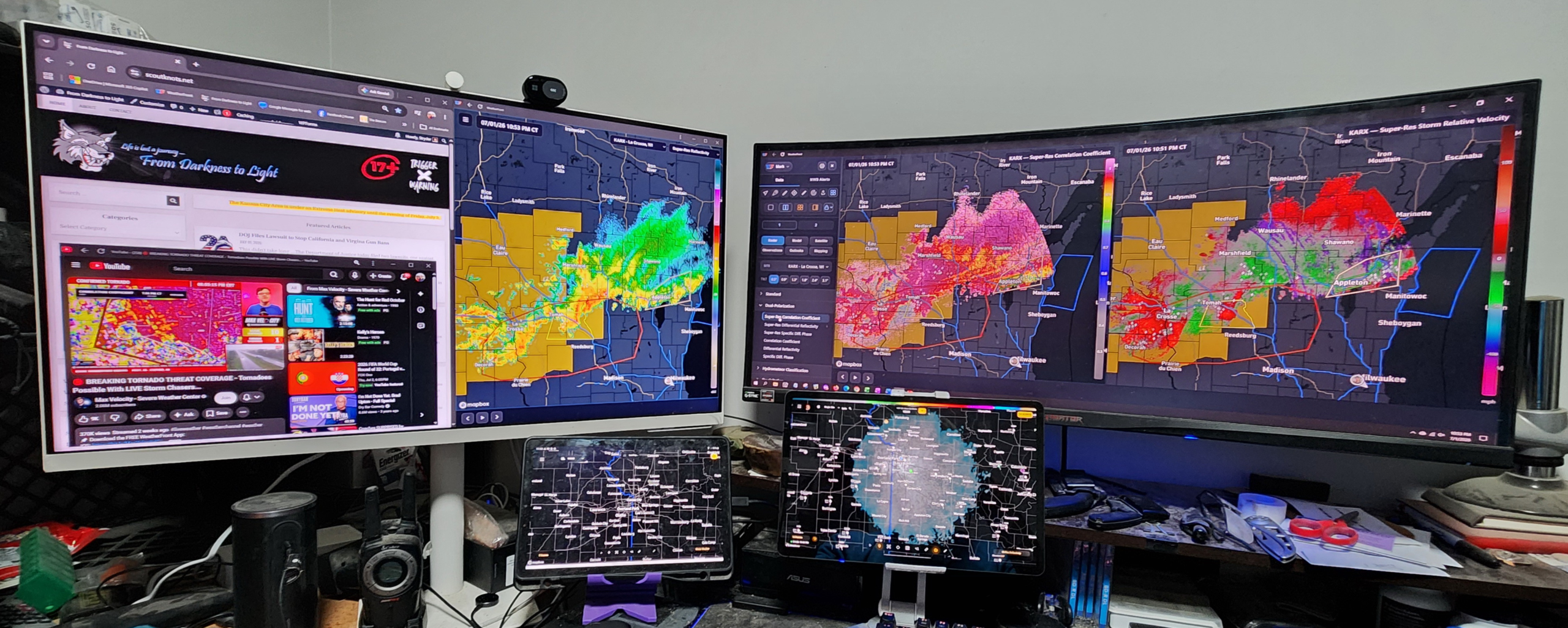
Former Spotter. First trained and certified in the early 2000s. I have been fascinated by severe weather and tornados since I was pre-teen. I became more of a weather nut in my late 20s, early 30s and eventally became a trained spotter and occasional chaser. Now I’m pushing 70, and to be honest, I’m not in the physical condition I really need to be in in order to safetly go out and chase storms. So, I park myself at home when the weather turns bad, and I track the storms and hunt for potential problems using my access to Radar.

WeatherFront: This is the latest addition to my software array for my desktop. I was checking out Max Velocity on YouTube and noticed that he had changed the program that he used for Radar, and how he seemed to be running a little smoother. So I tracked it down, pulled up the Desktop App and started getting to know the software. I am impressed. Easier to use than Radar Omega, and to be honest, a little cheaper to fun the full featured version. To be honest, I have turned off my full feature (Alpha) account for Radar Omega and am now currently running primarily with this software. As of 8/17/26, the Android App for this software had become available on the Google Play Store.

Radar Omegan: I’ve worked with a number of Radar programs and apps over the past twenty years, and for a time Radar Omega seemed to be the best one for my options and seemed to be pretty popular with the YouTube meterologists like “Max Velocity”. But WeatherFront is getting a lot of attention and many are moving. I will continue to keep it in my arsenal of radar software on my Phone, Tabelt and Desk Top, and if the day comes when they return to being the best option, I will make the move back to their Alpha level service.

MPing: This is a nice little app that I have on my Android phone and tablet. it allows the averge person to make weather condition reports to the National Weather Service, and to a database that relays the reports out to certain weather radar apps. This program gives the person different weather conditions to report, then adds the person’s location when they hit the submit button. Its a lot more User Friendly than other means for reporting storms such as the SpotterNetwork.
I am an Independent. I do not work with or for any storm chasers or weather organization. This is a hobby of mine, therefore, the more expensive aspects of running radar and chasing have been disconnected from my feeds, such as Radar data from Allison House. I do not make regular reports during the summer, the weather conditions move faster than most Social Media posts do, and I have never had a following for my previous web sites regarding weather. I may, during the winter months, post information related to approaching winter storms, or you may see me post pictures and screen shots of my radar, my feeds I receive, or photos of weather events I tracked. But it’s not going to be something you’ll see on a regular basis.
Trained Spotter

Storm Spotting and Storm Chasing are two things that you do not want to do unless you’ve taken the time to learn what you’re looking at, what you’re dealing with, and what to do if you find yourself in the wrong place at the wrong time. The National Weather Service sponsors classes online and sometimes in person where you can learn about Severe Weather and what you’re looking for. The Spotter Network promotes the taking a certain classes regarding storms and severe weather before they will let you register with them. Skywarn requires that you have a certain level of training to get involved with them, and they have a network of which you can link up with. I have been a trained spotter and registered with the National Weather Service, Spotter Network and Skywarn now for over twenty years. I still pursue classes, even though I’m not really active in the field anymore.


Weather Reports on this Site

I will sometimes talk about the weather depending on what the forecasters are calling for. Level One storms I will not likely say anything. Level Two or higher, then I might start a post where I can update the forecast information and add any notes or comments that may develop during the storm. This is where you will likely find screen shots of radar, pictures sent or shared with me of tornados related to the screen shots. You will see a severity level icon for the articles and in the articles for those who are level 3 or higher.
This is a basic chart for the Severity Levels. You can also find this information on the NOAA Natioanal Weather Service web site.
This aspect of my site is usually the most active during Tornado Season and during the Winter Storm Season.


